Aqidah
The Division of Tawhid into Three Categories
 Thaqib ibn Fazle

Tawhid is the foundation of Islam and the greatest right that Allah has over His creation. It is the central message of every Prophet, peace be upon them, and the first matter to which they called their people. Every act of worship, every righteous deed, and every aspect of a Muslim’s religion is built upon tawhid. This article explains the meaning of tawhid, its three categories as established through the Qur’an and the Sunnah, and the statements of the early scholars affirming this classification. Tawhid is the foundation of Islam and the greatest right that Allah has over His creation. It is the central message of every Prophet, peace be upon them, and the first matter to which they called their people. Every act of worship, every righteous deed, and every aspect of a Muslim’s religion is built upon tawhid. This article explains the meaning of tawhid, its three categories as established through the Qur’an and the Sunnah, and the statements of the early scholars affirming this classification. It is extracted from Al-Qawl al-Sadid fi al-Radd ʿala Man Ankira Taqsim al-Tawhid by Shaykh ʿAbd al-Razzaq ibn ʿAbd al-Muhsin al-Badr, may Allah preserve him.
An Introduction to Tawhid & It’s Categories
Tawhid is the foundation and greatest pillar of Islam. It is the central message of every Prophet, peace be upon them, and the basis of every act of worship. For this reason, the first thing the Prophets called their people to was worshipping Allah alone and correcting their beliefs.
The word tawhid comes from the Arabic root wahhada (وحد), meaning “to make one” or “to declare something to be one.” Linguistically, tawhid means oneness. In Islam, it means singling out Allah alone in everything that belongs exclusively to Him. Just as a tree cannot survive without healthy roots, no act of worship can be accepted without tawhid.
A comprehensive induction (istiqraʾ) of the Qur’an and the Sunnah shows that tawhid falls under three categories:
- Tawhid al-Rububiyyah (the Oneness of Allah in His Lordship)
- Tawhid al-Uluhiyyah (the Oneness of Allah in His Divinity)
- Tawhid al-Asmaʾ wa-al-Sifat (the Oneness of Allah in His Names and Attributes).
Although some ignorant individuals claim that this classification is a blameworthy innovation introduced by Shaykh al-Islam Ibn Taymiyyah, it is in reality the result of gathering all the relevant texts of the Shariʿah and deriving a complete classification. This is the same approach used by specialists in every field, just as the grammarians classified Arabic speech into nouns, verbs, and particles through istiqraʾ, even though the early Arabs themselves never expressed it in those terms.
Tawhid al-Rububiyyah
Tawhid al-Rububiyyah means firmly believing that Allah alone is the Creator, the Provider, the Giver of life and death, and the One who manages every affair of His creation. He has no partner in any of these actions.
Tawhid al-Uluhiyyah
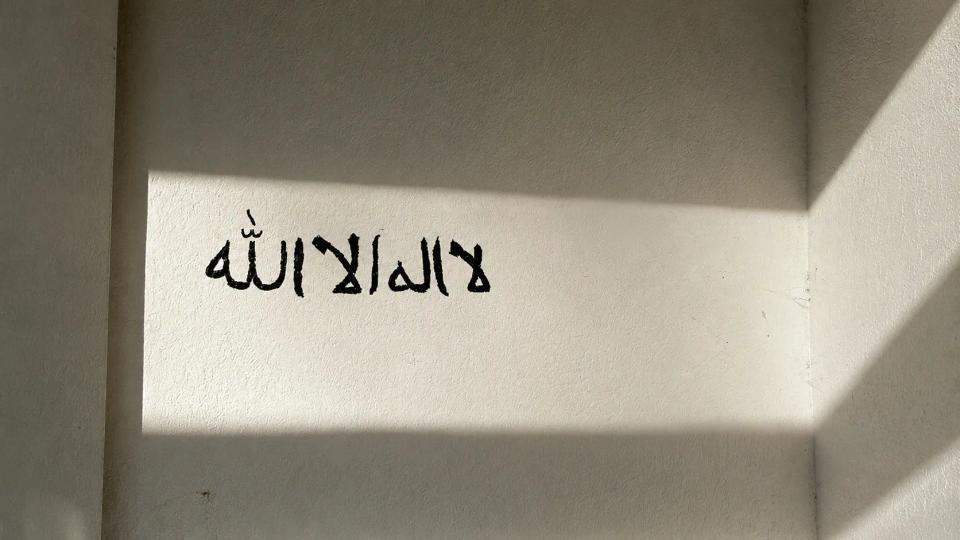
Tawhid al-Uluhiyyah means singling out Allah alone in submission, humility, love, reverence, and every other act of worship. He has no partner in any of them. The essence of this type of tawhid is realizing the meaning of la ilaha illa Allah (“There is no god but Allah”). This statement is made up of two parts: negation and affirmation. The negation means rejecting every object of worship besides Allah, whatever it may be, in every form of worship. The affirmation means directing every act of worship to Allah alone, sincerely, and in the manner He prescribed through His Messengers, peace and blessings be upon them.
Tawhid al-Asmaʾ wa-al-Sifat
Tawhid al-Asmaʾ wa-al-Sifat means firmly believing in the names and attributes of Allah exactly as they are mentioned in the Qur’an and the Sunnah. They are affirmed without distortion (tahrif), denial (taʿtil), asking how (takyif), or likening them to the creation (tamthil). This category is built upon two principles. The first is believing that Allah, the Mighty and Majestic, is completely unlike His creation in His names and attributes. The second is affirming every name and attribute by which Allah described Himself, or by which His Messenger ﷺ described Him, in a manner that befits His perfection and majesty, while accepting that the reality of how (kayfiyyah) these attributes are beyond human understanding.
Evidences for the Categories of Tawhid
Evidences for Tawhid al-Rububiyyah
Among the proofs of Tawhid al-Rububiyyah is the statement of Allah, the Exalted:
And His statement:
All praise is for Allah, Lord of the worlds.
(Surah al-Fatihah 1:2)
And His statement:
Unquestionably, His is the creation and the command. Blessed is Allah, Lord of the worlds.
(Surah al-Aʿraf 7:54)
The Qur’an repeatedly argues against the disbelievers by using their own admission that Allah alone is the Lord. Since they already accepted His Lordship, the Qur’an uses this as proof that He alone deserves to be worshipped. Allah asks them questions whose answers they already know and admit. Once they acknowledge His Lordship, He refutes them by showing that only He deserves worship. He also rebukes them for associating partners with Him even though they admit that He alone is the Lord. Whoever believes that Allah alone is the Lord must also believe that He alone has the right to be worshipped.
One example of this is His statement:
Say, “To whom belongs the earth and whoever is in it, if you know?” They will say, “To Allah.”
(Surah al-Muʾminun 23:84-85)
After they admitted this, Allah rebuked them for worshipping others besides Him by saying:
Say, “Then will you not remember?”
(Surah al-Muʾminun 23:85)
Evidences for Tawhid al-Uluhiyyah
Among the proofs of Tawhid al-Uluhiyyah is the statement of Allah, the Exalted:
And His statement:
It is You alone we worship, and You alone we ask for help.
(Surah al-Fatihah 1:5)
And His statement:
O mankind, worship your Lord, who created you and those before you, so that you may become righteous.
(Surah al-Baqarah 2:21)
And His statement:
So worship Allah, being sincere to Him in religion. Unquestionably, sincere religion belongs to Allah. As for those who take protectors besides Him, they say, “We only worship them so that they may bring us closer to Allah.”
(Surah al-Zumar 39:2-3)
Evidences for Tawhid al-Asmaʾ wa-al-Sifat
Among the proofs of Tawhid al-Asmaʾ wa-al-Sifat is the statement of Allah, the Exalted:
And His statement:
The Most Merciful, the Most Compassionate, Master of the Day of Judgment.
(Surah al-Fatihah 1:3-4)
And His statement:
Say, “Call upon Allah or call upon al-Rahman. Whichever you call upon, to Him belong the Most Beautiful Names.”
(Surah al-Israʾ 17:110)
And His statement:
Do you know of anyone comparable to Him?
(Surah Maryam 19:65)
And His statement:
Allah. There is no god but He. To Him belong the Most Beautiful Names.
(Surah Ṭa Ha 20:8)
And His statement:
There is nothing like Him, and He is the All-Hearing, the All-Seeing.
(Surah al-Shura 42:11)
Scholars Who Divided Tawhid into Categories
Imam Abu Hanifah al-Nuʿman ibn Thabit al-Kufi (d. 150 AH)
Imam Abu Hanifah said:
“Allah is invoked from above, not from below, for the below is not in any way a description befitting rububiyyah and uluhiyyah.”
(al-Fiqh al-Absat, p. 51).
His statement, “a description befitting rububiyyah,” affirms Tawhid al-Rububiyyah. His statement, “and uluhiyyah,” affirms Tawhid al-Uluhiyyah.
Abu Yusuf Yaʿqub ibn Ibrahim ibn Habib al-Kufi (d. 182 AH)
Ibn Mandah narrated in al-Tawhid:
Muhammad ibn Abi Jaʿfar al-Sarakhsī informed us. Muhammad ibn Salamah al-Balkhi narrated to us. Bishr ibn al-Walid al-Qadi narrated to us, from Abu Yusuf al-Qadi, who said:
“Tawhid is not established by analogy (qiyas). Have you not heard the statement of Allah, Mighty and Majestic, in the verses in which He describes Himself as knowing, powerful, strong, possessing. He did not say: ‘I am knowing, powerful, due to such-and-such reason I have power, by such-and-such cause I know, and by this meaning I possess.’ For that reason, analogy is not permissible in tawhid, and He is not known except by His names, nor described except by His attributes. Allah, Exalted is He, has said in His Book: O mankind, worship your Lord, who created you and those before you, that you may become righteous, and He said: Have they not looked into the realm of the heavens and the earth and everything that Allah has created?, and He said: Indeed, in the creation of the heavens and the earth and the alternation of the night and the day and the ships which sail through the sea…”
Abu Yusuf also said:
“Allah did not say, ‘Look at how I am the Knowing, how I am the Powerful, how I am the Creator.’ Rather, He said, ‘Look at how I created.’ Then He said: And Allah created you; then He will take you in death, and He said: And in yourselves. Then will you not see? That is, know that these things have a Lord who turns them about, brings them into being, and returns them, and that you are a created being and possess whatever comes from your being created. Allah, Mighty and Majestic, only pointed out His creation by means of what He created so that they might know that they have a Lord whom they should worship, obey, and affirm as One, so that they might know that He is their Creator, not that they came into being of themselves. Then He named Himself, saying: I am al-Rahman, I am al-Rahim, I am the Creator, I am the Powerful, I am the Possessor. That is, this One who brought you into being is named the Possessor, the Powerful, Allah, al-Rahman, al-Rahim, and is described by these names.”
He also said:
“Allah is known by His signs and by His creation, described by His attributes, and named by His names, as He described in His Book, and as conveyed to creation by His Messenger.”
He also said:
“Allah, Mighty and Majestic, created you and placed in you faculties and organs, some of your organs incapable of what others can do. He moves you from one state to another so that you may know you have a Lord. He made your own self a proof against you of His knowability, that you might come to know Him through His creation. Then He described Himself, saying: I am the Lord, I am al-Rahman, I am Allah, I am the Powerful, I am the Possessor. So He is described by His attributes and named by His names. Allah has commanded us to affirm His Oneness, and tawhid is not established by analogy, for analogy applies to something that has a likeness and an equivalent, and Allah, Exalted and Sanctified is He, has no likeness and no equivalent. Blessed is Allah, the Best of Creators.”
He then said:
“And how can tawhid be grasped by analogy, when He is the Creator of creation, unlike creation, there is nothing like unto Him, Blessed and Exalted is He. Allah, Mighty and Majestic, has commanded you to believe in everything His Prophet ﷺ brought. He has commanded you to be a follower, a listener, and an obedient one. Had the community been given latitude to pursue tawhid and seek belief by their own opinion, analogy, and desire, they would have gone astray. Have you not heard the statement of Allah, Mighty and Majestic: But if the truth had followed their desires, the heavens and the earth and whoever is in them would have been ruined? So understand what this explains.”[1]
This narration from Abu Yusuf contains the three categories of tawhid: Tawhid al-Rububiyyah, Tawhid al-Uluhiyyah, and Tawhid al-Asmaʾ wa-al-Sifat.
Ibn Hibban al-Busti (d. 354 AH)
Ibn Hibban said in the introduction to Rawdat al-ʿUqalaʾ wa-Nuzhat al-Fudalaʾ:
“Praise be to Allah, alone in the oneness of uluhiyyah, mighty in the greatness of rububiyyah, who watches over the souls of the world regarding their appointed terms, and who knows their vicissitudes and states, who bestows upon them His successive blessings, who favors them with His abundant graces, who brought forth creation, when He willed, without helper or advisor, and created mankind as He willed, without like or equal, so His will proceeded among them by His power, and His decision took effect among them by His might…”
(Rawdat al-ʿUqalaʾ wa-Nuzhat al-Fudalaʾ).
In this passage, he mentions the three categories of tawhid: Tawhid al-Uluhiyyah, Tawhid al-Rububiyyah, and Tawhid al-Asmaʾ wa-al-Sifat.
Ibn Abi Zayd al-Qayrawani al-Maliki (d. 386 AH)
Ibn Abi Zayd said in the introduction to his creed:
“Among that is belief with the heart and utterance with the tongue that Allah is One God, no god besides Him, no like Him and no equal, no child of His and no parent of His, no consort of His and no partner of His; His firstness has no beginning, and His lastness has no end; those who would describe Him cannot reach the essence of His attribute, and those who reflect cannot encompass His affair…” until he said: “…exalted is He above there being in His dominion anything He does not will, or anyone independent of Him, Creator of all things; unquestionably He is the Lord of His servants and the Lord of their deeds, and the One who determines their movements and their appointed terms…”
(al-Risalah by Ibn Abi Zayd al-Qayrawani).
In this passage, he mentions the three categories of tawhid: Tawhid al-Uluhiyyah, Tawhid al-Rububiyyah, and Tawhid al-Asmaʾ wa-al-Sifat.
Imam Abu ʿAbd Allah ʿUbayd Allah ibn Muhammad ibn Battah al-ʿUkbari (d. 387 AH)
Ibn Battah said in al-Ibanah ʿan Shariʿat al-Firqah al-Najiyah wa-Mujanabat al-Firaq al-Madhmumah:
“The foundation of belief in Allah, which creation is obligated to believe in order to affirm belief in Him, consists of three things: The first: that the servant believe in His rabbaniyyah, so as thereby to be distinguished from the doctrine of the negationists (ahl al-taʿtil), who do not affirm a Maker. The second: that he believe in His wahdaniyyah, so as thereby to be distinguished from the doctrines of the polytheists, who acknowledged the Maker yet associated others with Him in worship. The third: that he believe Him to be described with the attributes with which He must necessarily be described of knowledge, power, wisdom, and all else with which He described Himself in His Book. For we know that many who acknowledge Him and affirm His oneness in unqualified terms may nevertheless commit unbelief (ilhad) regarding His attributes, so that their unbelief in His attributes vitiates their tawhid…”
(al-Ibanah ʿan Shariʿat al-Firqah al-Najiyah by Ibn Battah, 693–694).
Here, Ibn Battah explicitly states that the foundation of belief in Allah consists of three matters: Tawhid al-Rububiyyah, Tawhid al-Uluhiyyah (expressed here as wahdaniyyah in worship), and Tawhid al-Asmaʾ wa-al-Sifat.
Abu ʿAbd Allah Muhammad ibn Ishaq ibn Yahya ibn Mandah (d. 395 AH)
In Kitab al-Tawhid wa-Maʿrifat Asmaʾ Allah wa-Sifatihi, Ibn Mandah devoted extensive chapters to the three categories of tawhid and gathered their proofs from the Qur’an and the Sunnah.
Among the chapters related to Tawhid al-Rububiyyah are:
- The oneness of Allah and His uniqueness.
- The beginning of creation.
- The creation of the Throne.
- Allah’s decree before creation.
- The signs of His Lordship in creation.
- Qur’anic proofs establishing His Oneness.
- The creation of the heavens as evidence of His Lordship.[2]
Among the chapters related to Tawhid al-Uluhiyyah are:
- The Beautiful Names of Allah, through which He is worshipped, invoked, and remembered.
- The Greatest Name of Allah.[3]
Among the chapters related to Tawhid al-Asmaʾ wa-al-Sifat is:
- The attributes of Allah with which He described Himself in His Book and which His Messenger ﷺ conveyed to the Ummah.[4]
Mulla ʿAli al-Qari (d. 1014 AH)
Despite being a Maturidi in theology, Mulla ʿAli al-Qari affirmed this classification. He said in Sharh al-Fiqh al-Akbar:
“The opening of His statement, ‘Praise be to Allah, Lord of the worlds,’ points to Tawhid al-Rububiyyah, upon which Tawhid al-Uluhiyyah is built. It requires the servant to realize true worship, and this is the first obligation upon him: to know Allah. In summary, Tawhid al-ʿUbudiyyah necessitates Tawhid al-Rububiyyah, though not the reverse… Indeed, most surahs and verses of the Qur’an comprise these two types of tawhid. Rather, the Qur’an from beginning to end explains and establishes them. The Qur’an is either information about Allah, His names, His attributes, and His actions, or a call to worship Him alone, or commands and prohibitions, or information about the reward of the people of tawhid, or information about the punishment of the people of shirk. Thus, the entire Qur’an concerns tawhid, its people, and their reward, and condemns shirk, its people, and their punishment…”
(Sharh al-Fiqh al-Akbar, pp. 9-10).
He explains that the Qur’an revolves around the categories of tawhid, especially Tawhid al-Rububiyyah and Tawhid al-Uluhiyyah, and that its verses consistently establish and explain them.
Finally, no report is known from any of the Salaf rejecting this classification of tawhid. Rather, their books and statements contain numerous passages that clearly affirm these categories, whether explicitly by name or through their discussion of Allah’s Lordship, His exclusive right to be worshipped, and His names and attributes. This classification was not introduced by Shaykh al-Islam Ibn Taymiyyah, nor is it a blameworthy innovation as some mistakenly claim. Rather, it is the result of a comprehensive induction (istiqraʾ) of the Qur’an and the Sunnah and is firmly rooted in the writings of the early generations. Whoever studies the works of the Salaf will repeatedly find these three categories affirmed throughout their writings.
Conclusion
The three categories of tawhid are not a later invention, but a classification derived through a comprehensive induction (istiqraʾ) of the Qur’an and the Sunnah. The early scholars affirmed these categories in their books and teachings, demonstrating that they are firmly rooted in the understanding of the Salaf. Understanding tawhid in this manner helps clarify the complete message of the Qur’an regarding Allah’s Lordship, His exclusive right to be worshipped, and His perfect names and attributes. Every Muslim should therefore learn tawhid, understand its categories, and worship Allah upon clear knowledge and sincere devotion, for it is the foundation of the religion and the key to success in this life and the Hereafter.