
Library

The Hijab: Between Colonialism & Identity Politics
In responding to the politicization of the hijab, Muslims have reproduced the very mistake made by colonialists, secularists, and assimilationists. While opposing the meanings imposed upon the hijab, they have accepted the premise that its significance is primarily cultural and political.

The Intersection of Qadr & Free Will
"What can my enemies do to me? My paradise and garden are in my chest. Wherever I go, they are with me and never leave me. My imprisonment is seclusion, my killing is martyrdom, and my exile from my homeland is travel."
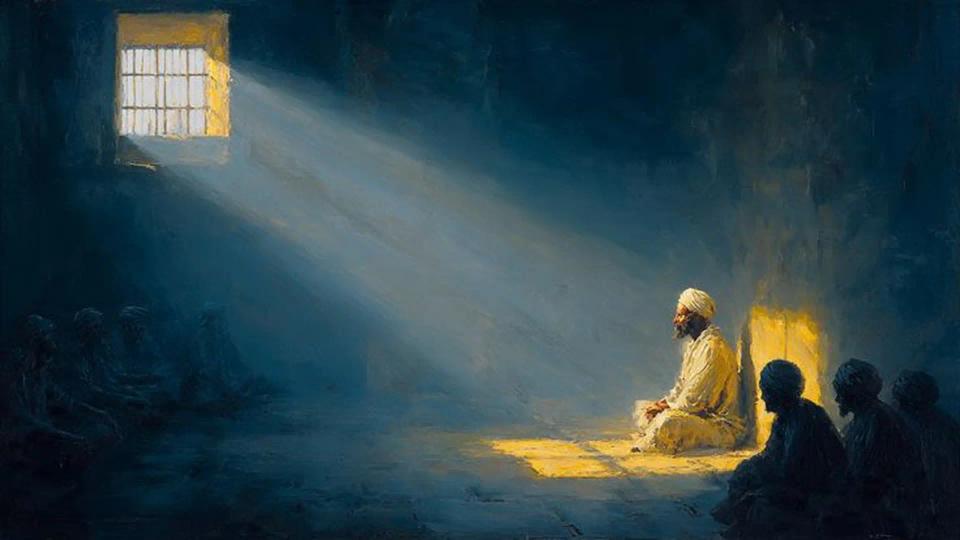
The Three Pillars of Worship: Love, Fear, and Hope
Worship is founded upon three indispensable pillars of the heart: love (mahabbah), fear (khawf), and hope (raja’). The essence of worship is the combination of utmost love for Allah with utmost humility, reverence, and submission to Him. These three pillars complement one another and together form the foundation of sincere and sound worship.

The Question of Evil and Suffering in Islam
Light is recognized through darkness, health is appreciated through illness, nourishment through hunger, and ease through hardship. Experiencing the absence of a blessing reveals its value in a manner that uninterrupted enjoyment often cannot.
Unintentional Sin & Repentance
A person does not incur sin for doing something haram out of genuine mistake, forgetfulness, or excusable ignorance. Consequently, repentance is not obligatory for such actions. Nevertheless, istighfar remains recommended.

Why Did Allah Create the Creation?
“O mankind, you are those in need of Allah, while Allah is the Free of need, the Praiseworthy.” (35:15)

Proving the Existence, Oneness, and Perfection of Allah
The entire universe bears witness to its Creator. The vastness of the heavens, the precision with which celestial bodies move, the succession of day and night, and the intricate systems that sustain even the smallest living organism all testify to His knowledge, wisdom, and power. Every part of creation exists within an order it did not establish and depends upon conditions it did not determine.

Why Was Allah Called “The Creator” Before He Created?
The names and attributes of Allah are eternal, uncreated, and inherent to His Essence.
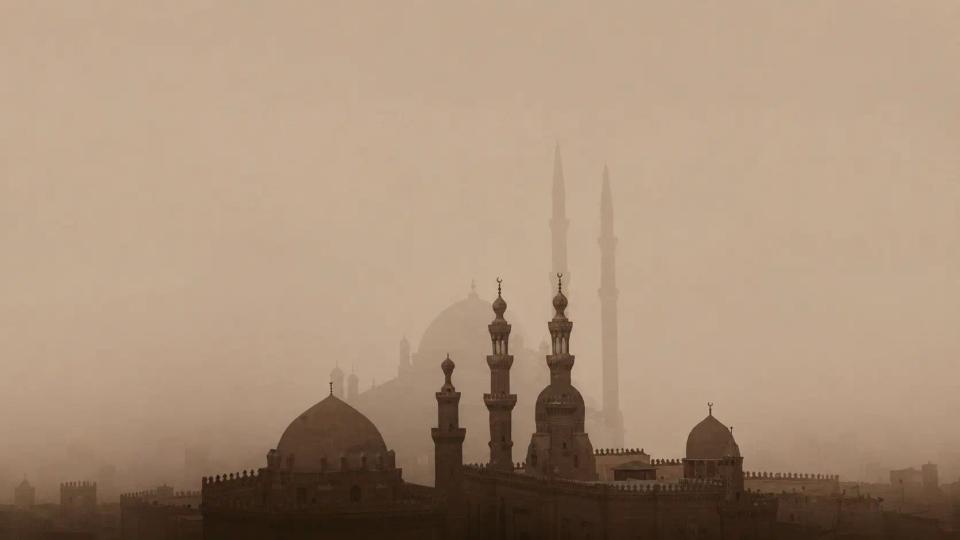
The Islamic Golden Age: Beyond the Orientalist Narrative
The popular Islamic Golden Age narrative credits Greek philosophy and heretical rationalism for Muslim intellectual achievement while blaming Islamic orthodoxy for decline, overlooking Islam’s own rigorous intellectual tradition and achievements in religious and worldly sciences.

Congregational Salah According to the Hanbali Madhhab
This article explains the rulings related to congregational prayer, according to the Hanbali madhhab, from Sharh Muntaha al-Iradat, Kashshaf al-Qina, and Matalib Uli al-Nuha.

Waswasa in Islam: Causes, Signs, and Treatment
This article explains waswasa, its causes, its effects on a person's religious life, and the Islamic guidance for dealing with it. Extracted from al-Ilaj al-Shar'i lil-Waswas al-Qahri by Dr. Mutlaq al-Jasir.
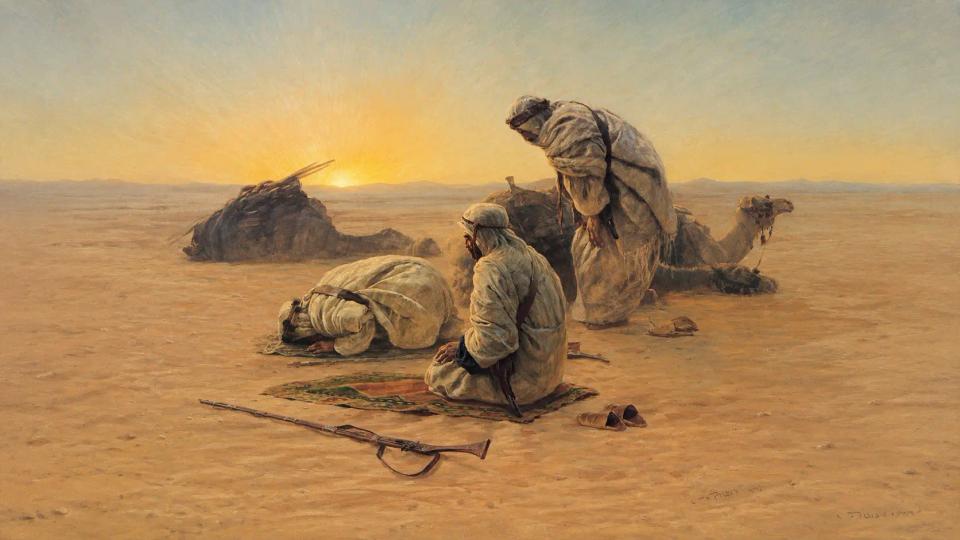
Voluntary Prayers According to the Hanbali Madhhab
This article explains related to voluntary prayers, according to the Hanbali madhhab, from Sharh Muntaha al-Iradat, Kashshaf al-Qina, and Matalib Uli al-Nuha.
Description of Wudhu According to the Hanbali Madhhab
This infographic presents the description of wudhu according to the Hanbali madhhab. The material is summarized from Sharh Muntaha al-Iradat, Kashshaf al-Qina, and Matalib Uli al-Nuha.

The Awrah & Hijab According to the Hanbali Madhhab
This article explains the rulings of the Hanbali madhhab regarding the awrah and hijab, from Sharh Muntaha al-Iradat, Kashshaf al-Qina, and Matalib Uli al-Nuha.

The Mu'tamad of the Hanbali Madhhab
This article explains where relied-upon (mu'tamad) position of the Hanbali madhhab lies, from Madarij Tafaqquh al-Hanbali.

Salah According to the Hanbali Madhhab
This article explains the rulings of Salah according to the Hanbali madhhab. The rulings are summarized from Sharh Muntaha al-Iradat, Kashshaf al-Qina, and Matalib Uli al-Nuha.
Sujud as-Sahw According to the Hanbali Madhhab
This article explains the rulings of Sujud as-Sahw (the prostration of forgetfulness) according to the Hanbali madhhab. The rulings are summarized from Sharh Muntaha al-Iradat, Kashshaf al-Qina, and Matalib Uli al-Nuha.
Salah Times & Missed Salah According to the Hanbali Madhhab
This article explains the prescribed times for the five daily prayers, prohibited times for prayer, and the rulings related to missed prayers according to the Hanbali madhhab, from Sharh Muntaha al-Iradat, Kashshaf al-Qina, and Matalib Uli al-Nuha.

Menstruation According to the Hanbali Madhhab
This article explains the rulings of menstruation and postpartum bleeding according to the Hanbali madhhab, from Sharh Muntaha al-Iradat, Kashshaf al-Qina, and Matalib Uli al-Nuha.
Impurities & Their Removal According to the Hanbali Madhhab
This article explains the rulings of removing impurity according to the Ḥanbalī school, from Sharh Muntaha al-Iradat, Kashshaf al-Qina, and Matalib Uli al-Nuha.

The Adhan and Iqamah According to the Hanbali Madhhab
This article explains the rulings of the adhan and iqamah according to the Hanbali madhhab, from Sharh Muntaha al-Iradat, Kashshaf al-Qina, and Matalib Uli al-Nuha.

Tayammum According to the Hanbali Madhhab
This article explains the rulings of tayammum according to the Hanbali madhhab, from Sharh Muntaha al-Iradat, Kashshaf al-Qina, and Matalib Uli al-Nuha. # Tayammum (Dry Ablution) *Tayammum* is a substitute for purification with water when a person is unable to use water in a legally recognized manner. It consists of wiping the face and hands with pure dust and permits whatever purification with water would normally permit, subject to the conditions explained below. # Conditions of Tayammum In addition to the general conditions of purification, *tayammum* has the following conditions: - **The time for an obligatory prayer has entered.** Tayammum is not valid before the time for prayer enters. - **There is a legally recognized excuse for not using water.** - **The *tayammum* is performed with valid dust or soil.** #### A Legally Recognized Excuse *Tayammum* is only permitted when a person is unable to use water in a legally recognized sense. This includes: - Water is unavailable. - Water is available but needed for drinking or survival. - Using water would likely cause illness, delay recovery, worsen an injury, or cause significant harm. - Water cannot be reached safely because of danger. - Water is available only at an unreasonably excessive price. - The available water cannot lawfully be used, such as when pure and impure water cannot be distinguished. If a person has only enough water to perform part of the purification, they must use the available water first and then complete the purification with *tayammum*. #### Valid Dust/Soil The dust used for *tayammum* must meet the following conditions: - **Natural earth (soil) or dust.** *Tayammum* is not valid with substances that are not considered natural soil, such as plaster. - **Pure and permissible.** This excludes impure, stolen, or usurped soil. If another substance is mixed with the soil, *tayammum* is valid so long as the soil remains the predominant material. - **Unburnt.** Ash cannot be used for *tayammum*. - **Fine enough that dust adheres to the hands.** Materials that do not leave dust on the hands, such as carpet, oe clean stone, cannot be used unless they are covered with sufficient dust. A person who has neither water nor suitable dust must pray without purification. They perform only the obligatory parts of the prayer and are not required to repeat the prayer later. #### Cases Where Tayammum Is Not Valid *Tayammum* does not replace water in every circumstance. It is not valid for: - Removing impurity from clothing, the ground, or other objects. - Washing the private parts after the discharge of pre-seminal fluid. - Washing the hands upon waking from night sleep. - Entering or remaining in a mosque while in a state of major ritual impurity. # How to Perform *Tayammum* *Tayammum* consists of: 1. **Striking the earth once with both hands.** Strike natural dust or soil once so that some dust adheres to the hands. 2. **Wiping the entire face.** Wipe the entire face, including the beard up to its hanging hair. It is not necessary to wipe beneath the beard, even if it is thin, nor the inside of the mouth or nose. 3. **Wiping both hands up to and including the wrists.** Wipe both hands only up to the wrists. The forearms are not included. 4. **Maintain the correct order and continuity.** The face must be wiped before the hands, and each part should be wiped without a significant interruption. This is required only when *tayammum* replaces *wuḍūʾ*. It is not required when *tayammum* replaces *ghusl* or removes impurity from the body. 5. **Make the correct intention.** The intention must specify what the *tayammum* is for, such as: - **Minor ritual impurity**, replacing *wuḍūʾ*. - **Major ritual impurity**, replacing *ghusl*. - **Impurity on the body** when water cannot be used. Simply intending to remove ritual impurity is insufficient, since *tayammum* grants permission to perform acts of worship but does not remove the ritual impurity itself. ### Combining Intentions A single *tayammum* does not cover multiple purposes unless they are intended together. For example: - If a person intends **both minor and major ritual impurity**, one *tayammum* suffices for both. - If a person intends **ritual impurity and impurity on the body** together, one *tayammum* suffices for both. - If only one of these is intended, the *tayammum* does not cover the others. # What Invalidates Tayammum *Tayammum* is invalidated by: - **Anything that invalidates *wuḍūʾ* or necessitates *ghusl.*** - **The expiry of the prayer time.** As soon as the prayer time expires, t*ayammum* is invalidated. - **Finding water when *tayammum* was performed because water was unavailable.** - **The removal of the excuse that permitted *tayammum.*** Such as recovery from illness or the disappearance of danger. - **The removal of anything over which wiping had been permitted,** such as a bandage, **or the expiry of its wiping period.**

Siwak & Grooming According to the Hanbali Madhhab
This article explains the rulings of siwak, hygiene and personal grooming according to the Hanbali madhhab, from Sharh Muntaha al-Iradat, Kashshaf al-Qina, and Matalib Uli al-Nuha.

Objects & Their Materials According to the Hanbali Madhhab
This article presents the rulings related to everyday objects and their materials according to the Hanbali madhhab, from Sharh Muntaha al-Iradat, Kashshaf al-Qina, and Matalib Uli al-Nuha.

Combining Intentions According to the Hanbali Madhhab
This article explains the rulings of combining intentions according to the Ḥanbalī school, from al-Qawāʿid al-Fiqhiyyah by Shaykh ʿAbd al-Raḥmān ibn Nāṣir al-Saʿdī, may Allah have mercy on him.

Etiquettes of Relieving Oneself in the Hanbali Madhhab
This article presents the etiquettes and rulings related to relieving oneself according to the Hanbali school, from Sharh Muntaha al-Iradat, Kashshaf al-Qina, and Matalib Uli al-Nuha.

The Types of Water According to the Hanbali Madhhab
This article explains the categories of water according to the Hanbali madhhab, from Sharh Muntaha al-Iradat, Kashshaf al-Qina, and Matalib Uli al-Nuha.
Wudhu According to the Hanbali Madhhab
This article presents the rulings of wuḍūʾ according to the Ḥanbalī school, from Sharh Muntaha al-Iradat, Kashshaf al-Qina, and Matalib Uli al-Nuha.

Ghusl According to the Hanbali Madhhab
This article presents the rulings of ghusl according to the Hanbali school, from Sharh Muntaha al-Iradat, Kashshaf al-Qina, and Matalib Uli al-Nuha.
The Division of Tawhid into Three Categories
This article explains tawhid, its three categories, and the evidence for this classification. Extracted from Al-Qawl al-Sadid fi al-Radd 'ala Man Ankira Taqsim al-Tawhid by Shaykh Abd al-Razzaq al-Badr.
The Importance of the Correct Aqidah
This article examines the importance of the correct ʿaqīdah, showing that belief in Allah alone is the foundation of the religion, the purpose of creation, and the starting point of every prophetic call.

Introduction to Fiqh & the Hanbali Madhhab
A concise introduction to the origins and development of the science of Fiqh, the Madhhāhib, and the Ḥanbalī Madhhab, extracted from the book Miftāḥ al-Bidāyah by Shaykh Dr. Muṭlaq al-Jāsir
Clinging to the Qur'an and Sunnah
This article explains the clear and preserved sources a Muslim always returns back to; the Qur'an and Sunnah, upon the understanding of the Salaf.
No matching content.